Friday, April 1, 2011

Kerala, India March 17th-22nd

After a whirlwind tour of Delhi, we boarded a flight to Kochi, the port city in the western state of Kerala. Fort Cochin is a conglomeration of its many visitors from the past 600 years—the fishing nets of the Chinese, the synagogues of the Jewish settlers, the stores of many Portuguese traders and Dutch cemeteries still remain today. We wasted no time getting acclimated with the Kerala culture, as we dropped our bags and headed to the theater for a pre-dinner show. We walked into the Kathakali theater just in time to see the actors diligently applying their elaborate make up and costumes. Kathakali, the classic Kerala dance and play style, emphasizes extreme facial expressions and body movements to express emotions. Imagine Mr. Bean wearing bright green face paint, adding a couple hundred pounds and using his eyes to tell the story of the triumph of good versus evil! These guys were unreal!! Inspired, we couldn’t stop the eyebrow movements and facial expressions (more like a lip twinge in my case) to “speak” during dinner. I thought my incredibly large eyeballs would give me the advantage, but Megan quickly won the title as the family Kathakali actor.

The following morning, we all hopped into the van anxious for our Kerala cooking class in a local woman’s home. I warned my party, as well as many locals, that I wouldn’t necessarily call myself an experienced chef, unless you count Kraft’s Macaroni and Cheese (I would!). The entire country let out a sigh of relief, as we quickly realized it was more of a demonstration than an active participation class. We benefitted from a delicious lunch with local specialties, all of which were properly cooked with no one injured. Nothing follows a good meal like a little shopping adventure and that’s exactly what we did, as we perused the shops of old Jew Town. Antiques, MC Hammer pants, a great book shop and much more filled our time for hours. Our time in Cochin ended with a delicious feast and music show at the Malabar Junction where the love affair continued with the Indian cuisine!

After a traditional dosa breakfast, our guide picked us up for an early Saturday morning surprise. Told to cover up, we knew nothing of what was in store for us. Within twenty minutes, we pulled up to a large fair grounds looking field, decorated with streamers and gold garland. Passing a crate full of multi colored chicks, our guide led us towards the sound of a “battle of the bands” type concert. As we turned the corner, 17 ornately decorated elephants stood in front of us, all holding up 4 choreographed dancers each To top that off, live musicians battled back and forth in front of the elephants to honor the great Lord Shiva! Hundreds packed into a small area to witness the Hindu festival.  As you can imagine, we fit right in with our jaws on the floor in complete awe.

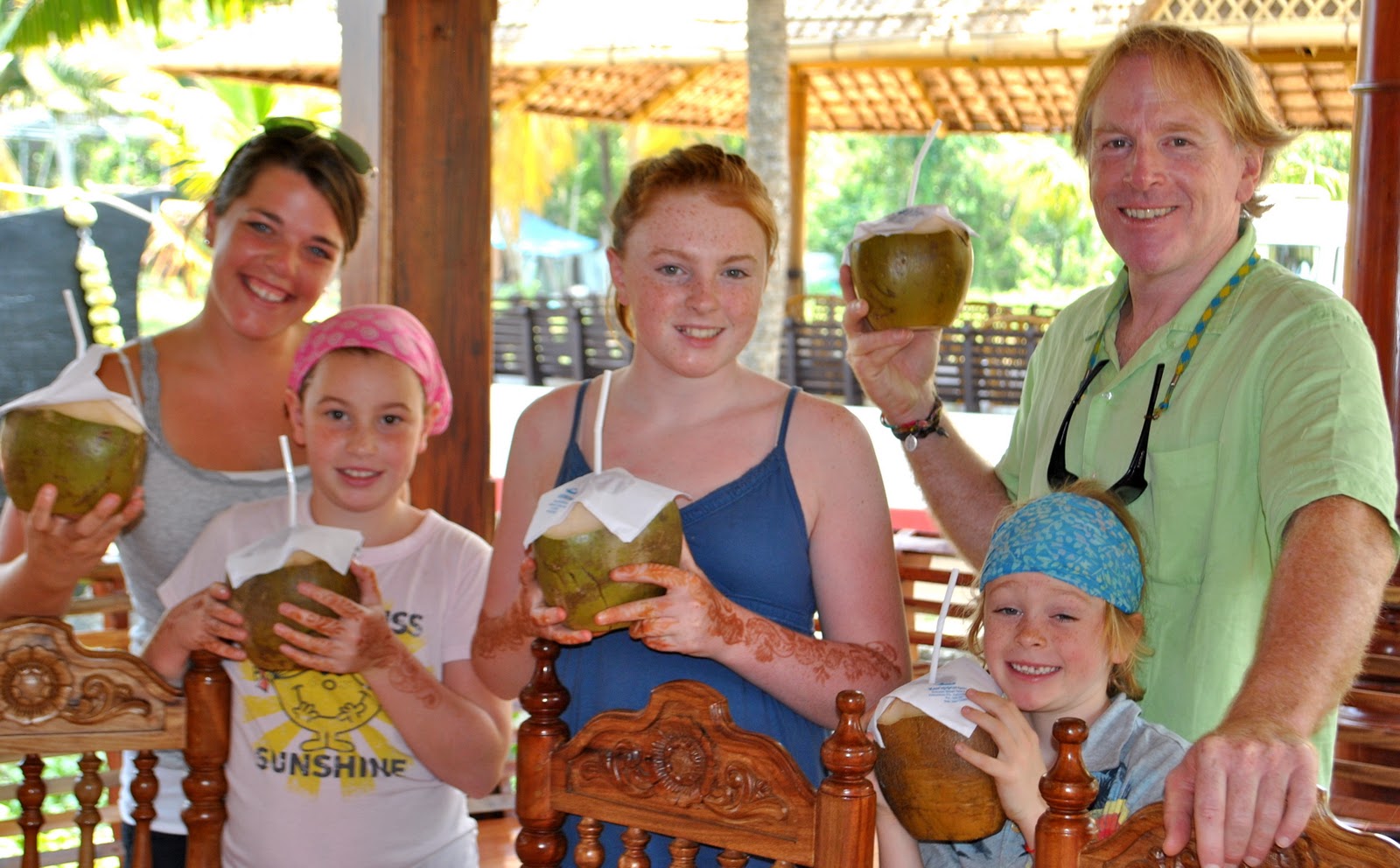
After an eventful drive, we arrived to our home for the next 24 hours--a houseboat on the Kerala backwaters.  A network of windy rivers, lagoons and canals, the Kerala backwaters stunningingly beautiful scenery nourishes the surrounding rice paddies and coconut groves.  You can't be the scenery and it was only topped off by a coconut upon arrival and three delicious meals.  The setting proved conducive for plowing through India novels and countless games of everyone's favorite card game, UNO! We ate like king and queens, slept wonderfully and was sad to depart our house on the water. 

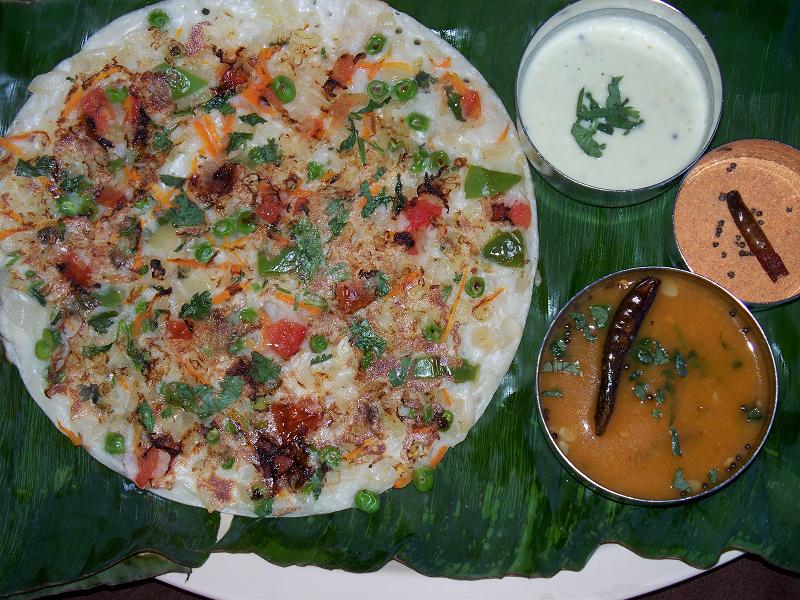
Uttapam = Delicious
Fortunately, we didn't had to head far as we stayed at a Kerala backwaters resort for the next two nights in Kumarakom.  Advertised as "perhaps paradise on earth", the Kumarakom resorted boasted two swimming pools, traditional Indian dance shows and great school rooms!  The true highlight of this time came with the introduction of two of my favorite Indian foods so far--uttapam and halwa.  Uttapam, a traditional breakfast food, is the Indian style pancake mixed with onions, tomatoes and green chilies.  With a little tomato chutney or vegetable sambhar instead of butter, it is the perfect breakfast treat!  Halwa is the perfect (until I found galub jamun, more to come later) after dinner dessert.  Made with either pumpkin, carrot or pineapple, the thick pudding made with butter and sugar required double helpings at the dinner buffet ;) Yum and yum!

Delhi, India March 14th-March 17th


Humayun's Tomb
India Gate
After an incredibly appreciative upgrade to a business class seat due to a long layover, we finally descended upon Delhi to a sky full of bright lights radiating from the home of  12 million.   Delhi encompasses two very different worlds, the Old Delhi and the New Delhi, which present entirely different yet delightful experiences.  After a delicious breakfast buffet at the stunning Imperial Hotel, we spent our first day exploring the spacious New Delhi designed by the British.  With tree lined massive avenues and a precise grid system layout, the new city wows you immediately.  We stopped first at the India Gate, the famous national monument of India commemorating 90,000 soldiers who died in World War I.  Standing forty two meters tall, the brilliantly designed gate points directly to the presidential palace just down the road.  
Qutab Minar
We quickly moved from the British empire influence to that of the Mughals, the massive empire that ruled and conquered India for eight hundred years.  Exemplifying the Mughal architectural style and eventual plan of the Taj Mahal, Humayan’s Tomb stands as an impressive monument to the 16th century Mughal emperor.  Surrounded by the sacred banyan trees, this World Heritage site’s gorgeous red and white sandstone with spectacular geometric carvings immediately had me in awe.  One can’t help but understand the comparison to Agra’s famous Taj Mahal, yet this was built 100 years prior.
Red Fort
Remnants and ruins remain of the seven different capitols occupying the Delhi area dating back to 1000 BC.  One of them being the massive Qutub Minar, the highest tower in India,  built in 1193 is the world’s largest brick minaret standing 73 meters tall.  Even more impressive when you remind yourself it was built without a speck of mortar.  The entire Qutub Complex includes mosque ruins, iron pillars, Jain temples and more.  Truly a compilation of several empires of rule! Due to our bodies adjusting to the 100 + temperatures, we called it an early day on sight seeing and opted for the massive swimming pool for an afternoon activity.
Day two provided an incredibly different feel, as we entered the old city wall to navigate the streets of Old Delhi.  Three kilometers in circumference, you can’t miss the Red Fort –the massive seven domed structure built by the Mughal ruler and builder of the Taj Mahal, Shah Jahan.  The synthesis of architecture is on display throughout the many rooms of the fort including marble queen bedrooms, concave mirror ceilings, pearl mosques and more!  The enormous size almost makes it believable to imagine the 1,000 elephants, 20,000 camels and 400,000 soldiers who once called this fort home!
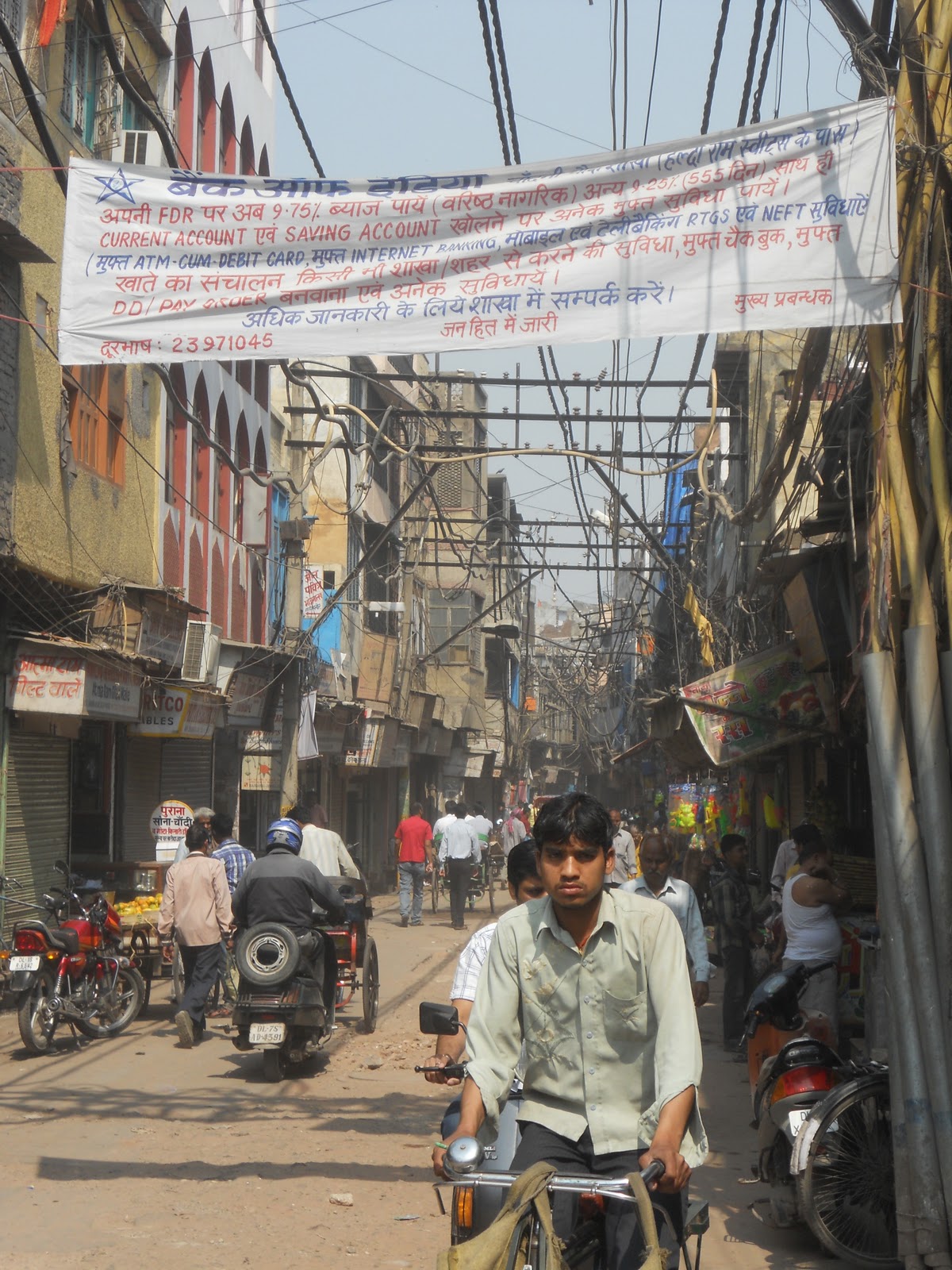
After our spectacular tour of the fort, we hopped aboard a bike rickshaw for a ride through the streets of Old Delhi.  With bundles of electrical wires hanging to head level, monkeys hopping from building to building and piles of cow dung patties on the sidewalks, we bravely said goodbye to our rickshaws and finished on foot.  Cows, dogs, monkeys and men all seem to eat, breathe, urinate and sleep on the same street, resulting in a variety of stimuli to feast your eyes upon!  With all the entertainment outside, we somehow managed to leave the streets of Old Delhi without any purchases! Instead, we headed for Jama Masjid, the largest mosque in India built by the now familiar Shah Jahan.  Seating 20,000 people it truly was a sight! Dirty, tired but with tons of stories, we trekked back to the hotel for a delicious Indian meal and an early bed time!

Mandalay and Yangon, Myanmar March 10th-14th

World's Largest Book
With fertile ground and a great location along the river, present day Mandalay was home to five ancient capitols from the thirteenth to the nineteenth century with a large number of these ancient civilizations still remaining (Ava, Amarapara, Sagaing, Mingdun and Mandalay). After departing the boat, we headed straight to Sagaing and Ava to marvel at the historical temples, while enjoying a view of the village from the horse drawn carriage. The seven tiered Ava Palace with the accompanying queen’s swimming pool and ornately carved nat figures in the teak walls definitely impressed our crowd. My true highlight came with a visit to the world’s largest book, the Ku Tho Daw Pagoda. With seven hundred twenty nine massive marble slabs engraved with Buddhist teachings, the project took eight years to build and with packed crowds of locals, one could tell the importance of this monument for the people. In true Myanmar fashion, our tour continued with a spectacular sunset atop Mandalay Hill. Overlooking the Shan Mountains, home of the Gurkha soldiers, the view provided a necessary aerial perspective of all the surrounding capitols. Although much different from the stupa skyline of Pagan, the Mandalay sunset did not disappoint as the fireball sun fell over the large gold pagoda. As a result of the heat, Tim and I savored the local Myanmar beer, as we all enjoyed a spicy meal at the Thai Golden Duck for dinner.

Our wonderful and well connected guide offered the kids and I a special surprise for school the following morning. With our school bags in hand, Mr. Aye drove us into the well protected American Consulate Library, where an officer met us to specially open the facility for the morning. I can’t determine if it was the result of not being in a library for months or the awareness that I was in a country that censors every book, newspaper, TV show and internet site for their citizens, but I have never felt a more overwhelming joy of packed shelves of books in my entire life. The American Embassy opened this particular library to lead free English classes, study areas and library books for the people of Mandalay. As the morning progressed, people began to filter in to meet with conversation partners and practice their vocabulary through an intense game of Scrabble. As far as school locations go, this one will definitely be hard to beat!

After lunch underneath the plentiful mango tree, we headed back to our beloved Irrawaddy River for a local boat ride to the Mingdun village. The famous king of Mingdun aimed to build four of Myanmar’s largest structures during his rule of the 18th century- lion statues, bell, lake and stupa. King Bodapoda succeeded in building the world’s second largest bell, measuring over 18 feet in diameter. Ruins remain of the lion statues and stupa, although damage from a massive earthquake did not leave them in excellent condition. As we continued walking through the village surpassing the ox driven taxis, our guide led us to a stunningly unique white temple. The Myatheindan, or Burmese Taj Mahal, was built by the king to honor the love of his life and ensure her place among the seven oceans, resulting in the seven waved layers of this temple. With the perfect afternoon light, this temple surpassed many as my favorite of the Mandalay area. We rushed through the streets to reach our boat just in time to catch a breathtaking sunset, becoming my favorite tradition of our short time in Myanmar.

With another early morning flight departure, we landed in Yangon before 9 am. Anxious to see the country’s largest city and former capitol, Mr. Win picked us up from the airport and we were on our way to see the sights. He obviously knew our crowd well, as our first stop was the famous Scott’s Market/Aung San Market. With its colonial architecture and cobblestone streets, it provided excellent people watching and every store imaginable, including an underground black market currency exchange which provided endless entertainment. We managed to escape without any purchases and spent the afternoon visiting the second largest reclining Buddha in the world and the towering Shwe Dagon Pagoda. Gleaming in gold and decorated with diamonds, the Shwe Dagon Pagoda is a spectacular work of Burmese temple architecture and the holiest Buddhist shrine in all of Myanmar. The main stupa is completely solid, every inch covered in gold and the upper parts are studded with diamonds totaling over 2,000 carats. Truly a wonder of the world! As curious tourists we requested a photo in front of Aung San Suu Kyi’s house, yet the guide and driver quickly and nonchalantly responded that if we were to stop they could get shot. We finished our last night in Myanmar with a delicious meal and ever better conversation, as we shared our favorite memories of our time in this wonderful country!

While stationed in Burma, Kipling wrote that “Burma is quite unlike any place you know about”. Isolated from the international community, the country is ruled by harsh tyrants, yet the locals seem to be the most gentle, beautiful and hospitable people that I’ve met throughout this trip. With thousands of temples creating never before seen skylines and sunsets on par with any in the world, Myanmar truly is a magical land.

Pagan and Irrawaddy River, Myanmar March 5th-10th


Ananda Temple
Pagan sunset
The planning involved to visit Myanmar began months ago.  With the United States disapproval of the rigid military junta government rule and treatment of their citizens, they were not too keen on the idea of my visit to “The Golden Land”.  Several times my visa application was denied and just minutes before I left Australia, the embassy finally stamped my passport. I let out a monstrous sigh of relief and began my intensive study into this historically rich country.  With no idea of what to expect, we arrived in the capitol of Yangon (Rangoon), knowing only that emails, international websites and television channels would be blocked, yet anxious to meet the locals, marvel at the beauty and consume the spicy cuisine.  We breezed through customs, grabbed our duffels (mine marked with 7 chalk X’s) and were greeted by our local guide, Win.  We stepped into the Governor’s Residence Hotel along embassy row, sad that we would have to put of the highlights of Yangon till the end of our time in Myanmar.  It turned into an early night—due to a total of 10 planes servicing the entire country, flights begin taking off quite early in the morning, and we would be on a 6:30 am flight to the ancient capitol of Pagan.
With a croissant to go and a quick flight, we arrived in Pagan before 8 am ready for a full day of temple sight seeing.  As we drove inside the old city wall of Pagan, thousands of temples begin rising from the ground like mushrooms.  Within the sixteen square miles of this holy land, over 4,000 temples remain—despite several large earthquakes, 2,217 of them remain in great condition!  A skyline unlike any other I’ve ever seen, towering stupors with brick, gold and silver extend for miles.  With no time to waste, we stopped at the Ananda Temple first.  Built in 1090 AD, the perfect execution of the unique, practical and massive architecture led to the murder of the architects to ensure no replica ever built.  Although UNESCO Status has been revoked due to political reasons, this truly is a breathtaking sight.
Our day continued with an essential stop at the Shwe Zi Gone Pagoda with the towering gold stupor.  Legend tells of the famous white elephant choosing this sacred spot for the enshrinement of Buddha’s teeth relic.  We managed to squeeze in two more big stops before lunch—a man made meditation cave dating back to the 11th century and the Gubyaukgi, the great painted cave temple.  With paintings dating back to the 12th century, the bright colors and details still remained in excellent condition.  Every where you looked told a story of Buddha’s life, providing a book for the people to learn of his life path.  Here we sat on the top of the temple, taking in the view of the city.  Our guide shared his personal feelings on life in Burma, for both himself and his children, many thoughts which related to the oppressive junta rule.  With the magical background and deeply intimate conversation, I just had to pinch myself to ensure this setting truly was a reality. 
Irrawaddy River Sunset
After a full lunch and a necessary siesta, we ventured to the local handicraft studio to marvel at the lacquer ware work.   Although stunningly beautiful, I seemed to fall for the smiles of the local children; a love affair that lasted our entire time in Myanmar.  With the sunset nearly approaching, we saved the Gu Byuak Gyi Temple for last and rightfully so.  One thousand year paintings adorned the ancient temple, still in stunningly perfect condition.  The beauty on the inside could not compare with the sunset view as we ascended to the top of the temple.  A skyline sunset unlike any other, we sat upon the temple walls and marveled at the beauty of this city.  One couldn’t help being overwhelmed with this sense of spirituality.  A day like ours could only be topped with a massive local meal and traditional puppet show.  Between the heat, the early morning flight and the busy day, we all knocked out early, ready to wake up for another full day in Pagan.
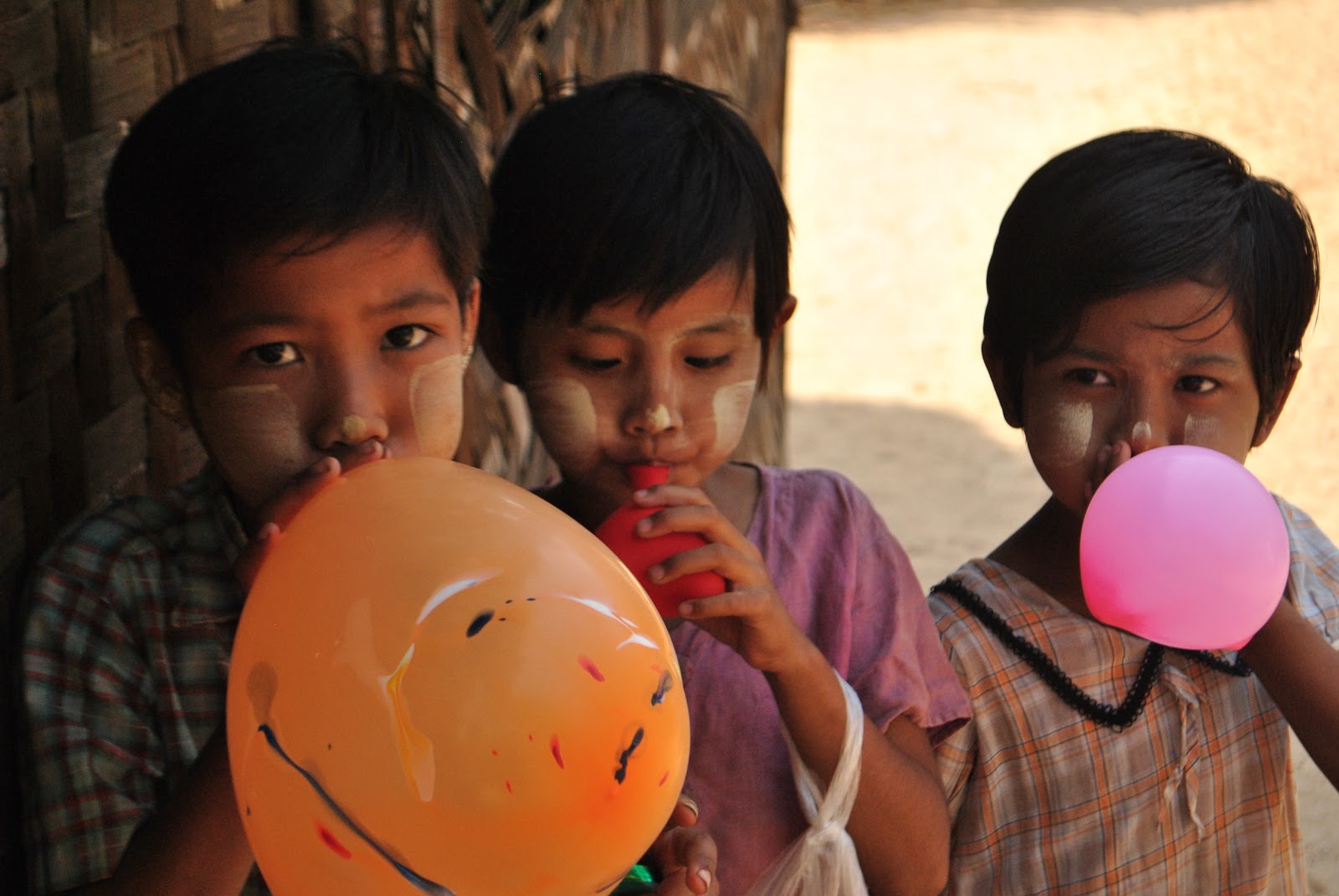
Our day began with a festively large visitor at breakfast—an enormous peacock to wish us well for our adventures in Pagan.  Throughout the day we stopped at many villages to meet the locals and gain insight into the real life in Myanmar.  We brought clothes, pens, soccer balls and balloons for the kids, as they shared their smiles and gracious offers into their homes.  Children as young as two years old joined in on the family chores of carrying water from the well, shucking peanuts, making beautiful pottery or climbing up trees to collect sap.  Over 80% of people in Burma, particularly in the villages, remain without electricity as the government sells the hydropower to China.  It didn’t take long for the locals to offer us a sample of their moonshine—a 50% alcohol content which left my throat on fire for hours!
Filled with liquid courage, we drove to the highest mountain in Myanmar ready to climb to the adjacent temple.  Although known for its size, it is truly valued as the official home of the thirty seven nats (spirits) of Burma.  All tell a story, yet the romantic epic of the nats Lady Golden Face and Mr. Handsome won me over.  The temple provided stunning views of Pagan, great exercise and a true test of agility as one must dodge monkeys while climbing.  A horse drawn carriage led us back through the dirt roads of Pagan for another majestic sunset atop our own private temple, a memorable scene I hope never to forget.
The following morning took us in the steps of Kipling, as we boarded a boat on the Irrawaddy River to travel the “road to Mandalay”.  For the next two days we took in the rural views of Myanmar, along one of the most historically important trading rivers of the world.  I took the opportunity to read an unsettling book telling the story of political prisoners in Burma, with many necessary games of family Uno in between.  Each afternoon we stopped at a local village, meeting the effervescent children who were anxious to practice their English.  I marveled at the workmanship of the women carrying up to three pots atop their head and one in each arm. 
After finding out I was a teacher, our guide even gave me a tour of the village school and set up a meeting with the local school teacher.  The school children proudly sang their ABC’s in English and Burmese, recited their single digit addition and seemed so thankful for the opportunity to learn.  It took the group to pull me away from the classroom, wishing I could do more to help and only  solidifying my passion for education.  On the morning of the third day, the temple skyline of Mandalay came into view, sadly concluded our Irrawaddy cruise.  With the cool river breeze, village stops and continual eating, you couldn’t beat the mode of travel to Mandalay.  Now onto Mandalay….

Saturday, March 5, 2011

Vietnam: Ho Chi Minh City March 3rd-March 5th

We arrived in the city of nine million, ready to take in the history of the last city to fall to Communists in the war and the headquarters of the American forces.  Our guide Thuy picked us up from the airport and we headed straight to the famous Cu Chi Tunnels just 70 kilometers from central Saigon.  Originally built by the French, the Viet Cong extended the tunnels to 200 kilometers long and added three different levels reaching up to thirty meters underground.  Not only did the engineering amaze me, but the thought of it only a mile and half from an American base of 10,000 soldiers, yet it was never discovered.  Used to shelter themselves from the tons of American bombs, the VC built an immense tunnel complex equipped with camoflauged rolling traps, see saw taps and armpit traps in the ground, all with blood poison to ensure an immediate death.  As we walked into the complex, the guards led us to a video viewing room to watch a fifteen minute Viet Cong video on the “devils from Washington D.C.” and “American serial killers”.  No question, the Cu Chi Tunnels communicated the animosity and disdain towards Americans more than any other site we had visited so far.  We emerged from the viewing room, only to scream seconds later as guards let off pretend land mines to really get the feel for life throughout the war.  Throughout our hour and a half on the complex, I never seemed to get use to the unexpected boom of the land mine—I cannot even imagine living in a state of constant angst at one wrong step ending your life.  After walking through the trap display room, we reached the shooting range where they offer tourists the opportunity to shoot an M-16.  I declined, yet continued to jump every time a shot went off making it clear I was a foreigner.  Locals didn’t flinch as gunfire went off ten feet behind them.  We concluded our time at Cu Chi, walking through the insanely small tunnels many called home.  At one point I had to crawl on my hands and knees, as even leaning over my height was too much to continue.  I left the Cu Chi tunnels with a nauseous feeling in my stomach and a hyper jumpy state, as even a butterfly coming towards my head startled me!  Megan wisely stated that we all needed to get to the hotel ASAP to watch a Disney movie.
After our day excursion we headed into the central of Ho Chi Minh City, which made the traffic in Hanoi look like nothing.  Locals claim that although the city population totals nine million, there seem to be ten million motor bikes on the road at any point.  We reached the Majestic Hotel with stunning views of the Saigon River and a sky bar that provided entertaining aerial views of the insane traffic.  After a powerful school session, we hit the streets for what we do best—shopping and eating.  Shopping stalls with knock off EVERYTHING lines the main drags, including banned books, handbags and sunglasses.   Dinner at Lemongrass proved to be a winner, as fried noodles with Chin Shu spicy chili sauce has turned into my favorite dish!  I walked around the city center checking out the night life scene, which proved to be much more entertaining in the streets than in the bars.
At 10:00 am the following morning, our guide met us in the lobby for a packed day of sight seeing.  Our first stop—the War Crime Museum, originally named the American War Crime Museum until Bill Clinton’s visit in 2000 to normalize relations.  A three level museum, it is broken up into various exhibitsions including The War Truths, Americans Use of Agent Orange, War Crime Photos, A Photographer’s Perspective and Vietnam After the War.  The pictures of the horrendous consequences that still exist today from Agent Orange were the hardest to take in—the cleft lip, limb deformities, blindness and more.  The war crime focused on several massacres that I had only read one line about in history class.  I spent a majority of my time mesmorized by the images captured by photographer’s who risked their lives to inform countries of the reality of the war.  The kids opted for the Dove Peace Room, as many of the photos were simply too grotesque for their young eyes.  The museum is definitely a difficult, yet essential stop in Ho Chi Minh City.
Followed by a lighter stop at the Thien Ho Temple to honor the goddess of the sea, we dined at Pho 2000/Pho for a President, a hole in the wall restaurant made famous by a Bill Clinton visit in 2000.  Pictures of Bill adorn the entire establishment, as we enjoyed one of our favorite Vietnam dishes.  We attempted to walk through the Chinatown markets, yet couldn’t quite handle the crowds as it takes 5 minutes to move 20 feet.  Instead, we drove by the Reunification Palace, where in 1975 a Viet Cong tank busted through the gates to declare the fall of Saigon and the unification of Vietnam as a one party communist country.  With the equivalent of $5 USD in Vietnamese Dong, I searched for a fun and exciting way to spend my last few hours in Vietnam.  I walked in and out of numerous stores, yet couldn’t find a product that won me over.  Instead, a man standing outside the Saigon Spa offered a 45 minute hot oil massage for only $5 USD.  Really? Can I pass that up? Pure heaven!
I thoroughly enjoyed the time we spent in Vietnam and overwhelmed by the generosity and forgiving spirit of the Vietnamese people.  It is a country with a tragic history, yet a hopeful future! I cannot wait to be back!

Vietnam: Hoi An February 27th-March 2nd

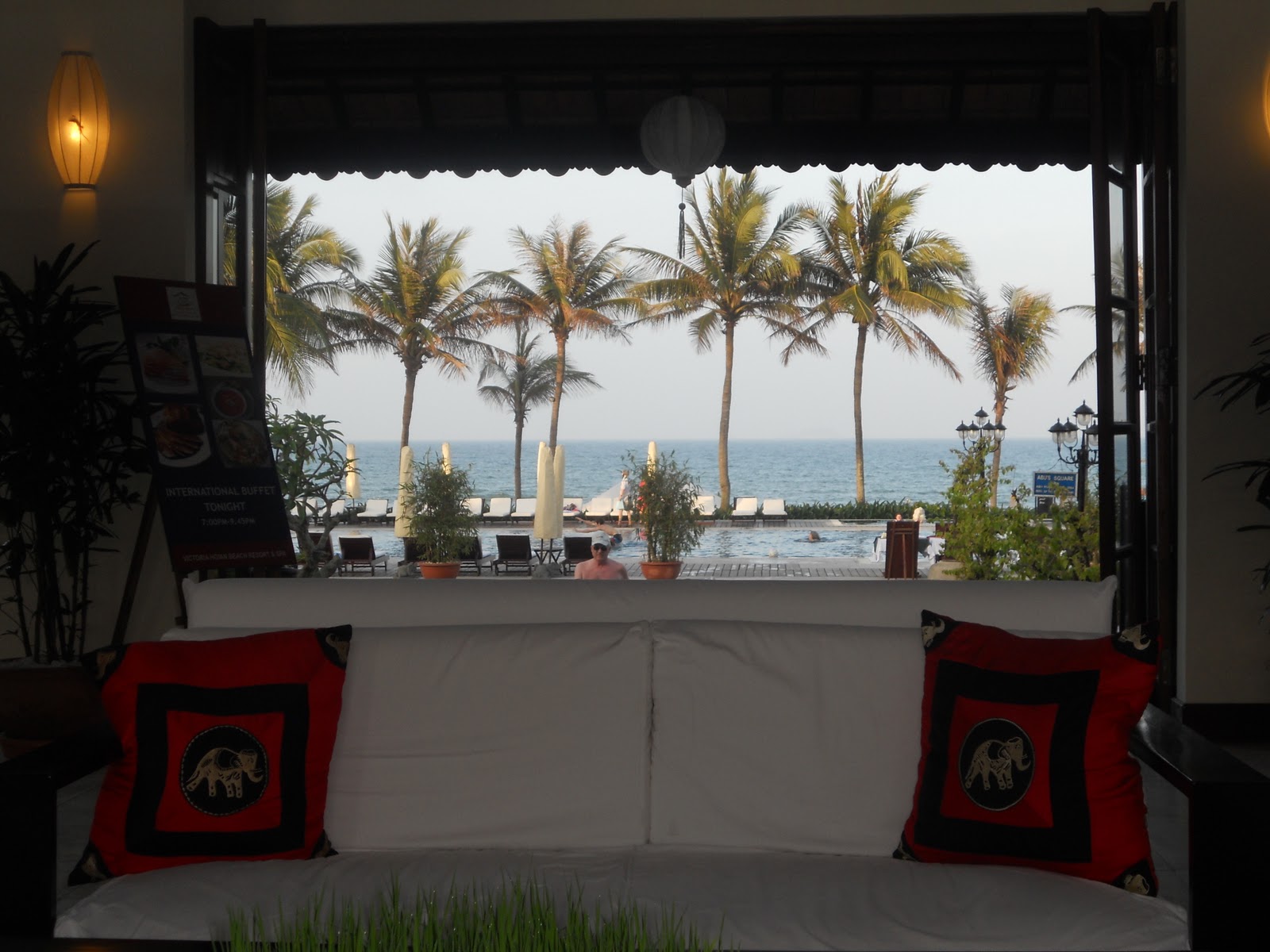
We drove through the Truong Son Mountain Range along the eastern coast from Hue to Hoi An marveling in the emerald green rice paddies.  The novelty of the number of motorbikes carrying five member families and everything from dogs to ducks on the back never wore off.  En route to Hoi An, we stopped at an American check point and dipped our toes in the South China Sea at the famous China Beach (site of American TV show in the 90’s).  Our guide Thin provided names of the best shops in Hoi An and even more importantly, a name of a cheap laundry service and left us on our own at the Victoria Hotel overlooking both the sea and river. 
After an afternoon filled with swimming in the South China Sea and a rice pancake lunch, we headed into the bustling city center of Hoi An.  Known for their multitude of excellent tailor shops, we chose Sun Tailors as our first destination.  With an option to choose designs from over twenty fashion catalogues or bring in your favorite article of clothing to replicate, the staff takes your measurements, helps you choose your fabric and guarantees your desired customized article of clothing to be delivered to your hotel within twenty four hours.  Wedding dresses,  work pants, swimsuits, pajamas, you name it! Although tempting, I had my eye on the shoemaker shop next door.  With over three hundred styles and several rings of leather choices, I fell in love with a pair of strappy sandals with pewter leather.  The woman outlined my foot on a piece of white printer paper, measured the circumference of my cankle (not ankle) and the arch of my foot and similarly guaranteed a delivery for the following evening, all for under $20.  The shoes arrived not only arrived on time, but in perfect condition and fit like a glove J
Although a shopping highlight, nothing could top the experience at the Lac Viet jewelry store.  I could only think of how much several of my girl friends would love this store, as you enter to find yourself in the middle of several tables of stacked Tiffany’s and Cartier catalogues.   Still can’t find your design? No worries, as the staff pulls out an I Pad from behind the counter to search jeweler websites .  Of all the options, I chose a rather boring yet practical pair of Tiffany silver ball earrings which cost $12 to have made.  Truly a store after a woman’s heart, they offer orders from the U.S. with shipping included! This will definitely not be my last shopping trip with Lac Viet.  The remainder of our time in Hoi An provided fantastic shopping , yet none would compare to this first night.
We developed perfect daily itineraries in Hoi An, as mornings were spent in three hour school sessions, followed by an afternoon on the beach to be concluded with nights strolling the beautiful lit of city.  To truly feel like a local, I sucked it up and even took a motorbike taxi into town one afternoon.  I almost killed the driver by suffocation, as I wrapped my arms around him for dear life.  At night we enjoyed delicious Vietnamese Cuisine including sautéed morning glory, Cau Lo pork noodles, pho noodle soup and more Dalat Premiere Wine!  The walks along the beautifully lantern lined streets and decorated store fronts provided a perfect post dinner show each and every night.  An absolutely beautiful area, I was sad to leave Hoi An yet anxious to arrive in Vietnam’s largest city, Ho Chi Minh City, formerly known as Saigon.

Friday, March 4, 2011

Vietnam: Ha Long Bay and Hue, February 23rd-27th

After several heavy hearted days in Hanoi, we graciously accepted the opportunity to enjoy the stunning scenery of Vietnam. After a four hour drive through the rice paddies and luscious green countryside of Vietnam, we arrived at Ha Long Bay. A UNESCO World Heritage Site, Ha Long Bay features thousands of limestone karst mountains emerging from the calm water. Our group didn't know much about the natural phenomenon, other than a cameo in an old James Bond movie. However, our three hour boat cruise provided superb boat spotting, a tour of a permanent fishing village in the water and a stop to explore million year old caves. Scientists claim the process of evolution created the hollowed out caves of stalagmites and stalagtites, while the Vietnamese believe the gods sent a family of dragons to defend the land from the invading Chinese and the caves were only remnants of their destruction. Even the nerdy science girl in me couldn't resist a good dragon story :)  Following the cave tours, the captain of our boat doubled as the chef and whipped up a scrumptious Vietnamese meal filled with spring rolls, pineapple, fried rice and shrimp.  The perfect outing could only be completed with an impromptu shopping session, as a woman from another boat appeared with boxes of fresh water pearl jewelry and postcards for sale.  Got to love an unexpected shopping moment!  Even with a four hour drive back, the sensory overload outside the window never got boring.  I don't know if there is much better than passing a motor scooter on the highway that is somehow balancing twenty ducks on the back. With a few pottery and weaving studio stops, we arrived back late at our hotel and hit the pillows!

After a incredibly successful school morning and a stop at Vietnam's version of a fast food restaurant, Pho 24, we headed to the airport.  We landed late at the Hue Airport, an old American air base used in the Vietnam War.  Hue was not only the capitol city of Vietnam under the Nguyen dynasty from 1802-1945, but also an important location during the deadly 1968 Tet Offensive Battles.  Our guide Thin picked us up the following morning for a full day of sight seeing.  Our first stop was at the Imperial City, a walled fortress and palace during the reign of the Nguyen Dynasty.  Surrounded by twenty meter thick walls, the Imperial City housed the Purple Forbidden City for Nguyen emperor's and their hundreds of concubines.  Unfortunately, both American and Viet Cong bombs destroyed over 60% of this enormous site and what remains shows the evidence of the war through thousands of bullet holes.  The only building that remained completely in tact from the war was the Emperor's library and spectacular theater.  The power of the arts and education....Although the site magnificent, the words and knowledge from our guide truly made this experience come to life. 

We journeyed through the relatively orderly (compared to Hanoi) streets of Hue before we arrived at the Pagoda of the Heavenly Lady.  The most famous Vietnamese pagoda, the Heavenly Lady is home to the famous 1963 Buddhist monk who lit himself on fire on the streets of Saigon in protest.  Many from that time will know the photograph, as it generated immense emotional response as one could see his frail body enveloped in flames.  I had learned his actions were to protest the war, yet in actuality he was protesting the religious persecution of Buddhists by the South Vietnamese President Diem.  Within the pagoda grounds, several pictures and belongings of the monk remain, including the blue car in the background of the famous picture. 

Following our tour of the pagoda, we ventured down to the Perfume River for a dragon boat ride.  The leisurelly stroll down the river provided views of family temples, cemeteries and many Vietnamese farming the beautiful land on the river banks.  Our boat tour concluded at the steps of Emperor Minh Mang's enormous tomb.  Built by his first son, this tomb consists of forty separate temples, thirty stone protective statues and sixty word carved stones with the emperor's favorite poems and words of wisdom! We returned to the hotel for an afternoon swim and a search for Vietnam fiction and nonfiction novels to continue my fascination and never ending desire knowledge on the history leading up to and during the Vietnam/American War.  Our night ended with a superb six course Vietnamese  meal, highlighted by the appetizer spring roll course designed in the shape of a peacock! Between devouring the peacock and my new found obsession with Vietnam's version of Two Buck Chuck wine (Dalat) the dinner was a definite highlight. 

For day two in Hue, we headed out for a little bit of a road trip.  Travelling along the Ho Chi Minh Trail, a complex set of foot and bike trails within the jungle used by the Viet Cong to transport people and war supplies, we passed multiple war cemeteries some with over 20,000 soldiers.  We reached the Khe San Air Base, the sight of a gruesome decoy battle in 1968 just days before the Tet Offensive.  The landing strips remain, as do several remnants of bombs, bunkers, a massive Chinook helicopter and a present day museum.  This moment began my two facial expressions for the majority of the day--my mouth open at the gruesome nature of pictures and stories told from the other side, or trying to brush away the unwanted tears that seemed to find their way to me today.  We left the air base to head towards the old DMZ at the 17th parallel.  Along the way, we passed the cleverly named Rock Pile, a large pile of rocks the Americans used to protectively watch the DMZ.  All that remains today at the 17th parallel is a small bamboo bridge over the natural boundary of the Ben Hai River with accompanying loud speakers used by both the North and the South.

We made our final stop at the Vinh Moc tunnels, a complex underground tunnel system built by the villagers to protect themselves from the American bombs.  Built in 1965, the tunnel complex measures of 2000 meters long with six entrances, a kitchen and rooms up to 30 meters below ground supplying "housing" for 60 families.  The tunnels are now open for tourists to walk through to experience the life of a Vinh Moc at that time.  Megan and the kids opted out immediately, as the small spaces with no ventilation did not appeal to them.  However, Tim and I walked through the pitch black tunnel system, amazed by the engineering and survival methods of this group of people.  I experienced quite a scare, for at one point I could hear loud, running footsteps approaching Tim and I in the bitch black.  My instincts kicked in and I stepped inside one of the family bunkers, scared as shit.  We laughed about it later, yet awful images and thoughts were going through my mind as it happened!

The journey home provided picturesque views of canoes with paddlers in conical hats traveling through rivers with rolling green hills in the background, untouched by the Vietnam War.  Such a beautiful country..